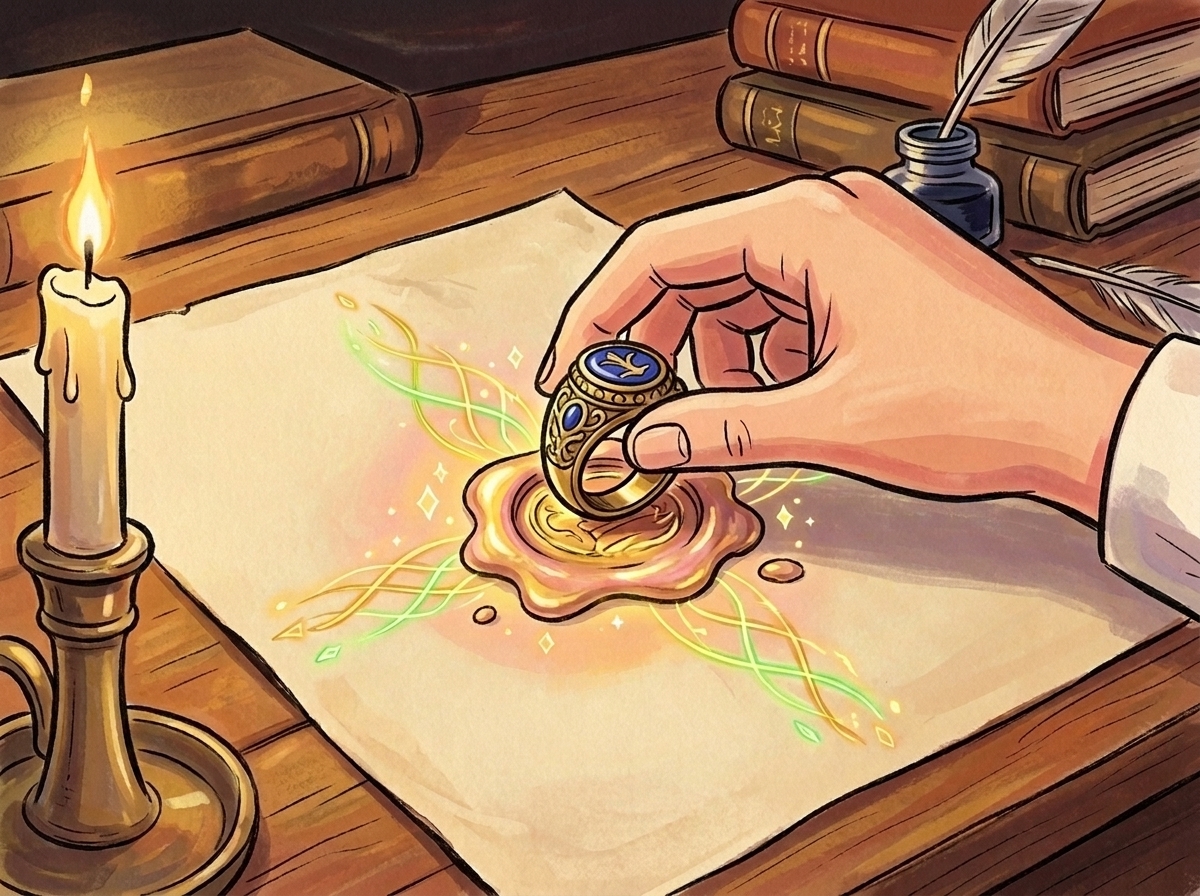
In Storybook No. 1, we saw that Bitcoin is a shared notebook. Everything inside it is protected by two completely different kinds of math:
A little more detail
Lock #1 (The Page Seal) is the 10-minute puzzle computers solve to seal a new page of payments. Lock #2 (Your Secret Stamp) is the personal key that proves you authorized a payment from your line.
Quantum computers don’t treat these two locks the same way—one is barely fazed, and the other just needs a planned upgrade.
Separate the two questions
One lock guards the notebook’s pages. The other guards your personal stamp.
Page 1 of 6
Three practical habits that already help today.
While cryptographers finalize post-quantum upgrades across the internet and Bitcoin, good everyday wallet habits already add an extra layer of protection.
Don’t reuse the same Bitcoin address over and over.
Read more
Modern Bitcoin addresses hide your public key behind an extra hash shield until the first time you spend from that address. Using a fresh address for each payment keeps both your privacy and that extra shield intact.
Lost backups and phishing steal coins today—quantum computers don’t.
Read more
No wallet has ever been drained by a quantum computer, but people lose access every week by typing recovery words into fake websites or losing their only backup. Focus your security on what matters right now.
If you landed here first, flip through Storybook No. 01 to see how handing over an apple, a shared notebook, and a secret stamp explain all of Bitcoin in 3 minutes.
This visual storybook adapts the two-threat framework (Grover’s algorithm vs. Bitcoin’s 2,016-block difficulty adjustment, and Shor’s algorithm vs. asymmetric signatures and lattice-based post-quantum cryptography), drawing on Jake Rubin’s essay “Quantum Computing Is Not the End of Bitcoin — It’s Just the Beginning” and NIST’s Post-Quantum Cryptography standards.
 Bitcoin Canvas